


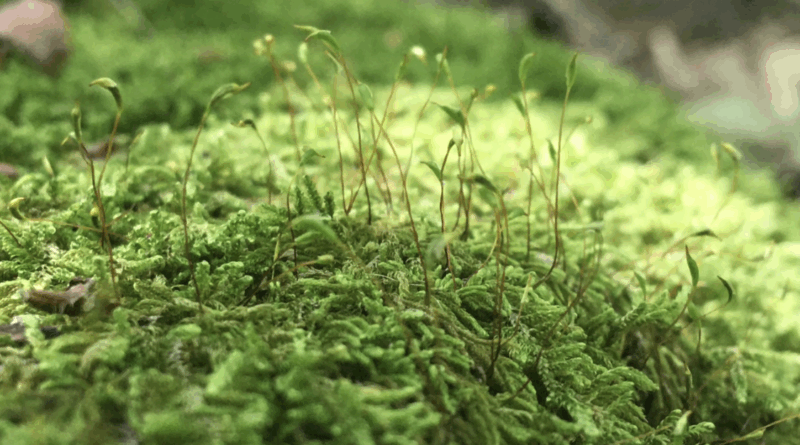
Moss Grown in 10x Earth’s Gravity Surprises Scientists with Supercharged Photosynthesis
Often overlooked as primitive greenery, mosses have proven to be anything but delicate. These ancient plants flourish in extreme environments — from Antarctica’s icy tundra to high-altitude mountain peaks. Now, new research shows that moss can even thrive under gravity 10 times stronger than Earth’s.
🧪 Hypergravity Experiment Unlocks New Clues
Led by plant physiologist Tomomichi Fujita of Hokkaido University, the study grew spreading earthmoss (Physcomitrium patens) for nearly eight weeks in a specially designed centrifuge that simulated three, six, and ten times Earth’s gravity.
What they found was astonishing: the moss not only survived, but actually grew larger chloroplasts, longer shoots, and increased its photosynthesis rate by up to 52% under high gravity conditions.
“We’ve long wondered how mosses endure such extremes,” said Fujita. “This might be part of the answer.”
The results were published July 16 in Science Advances.
☀️ More Gravity, More Photosynthesis?
Typically, stressful conditions suppress plant growth and photosynthesis. A 2014 study showed wheat exposed to 500x gravity had plummeting photosynthesis levels. So why did earthmoss flourish?
Fujita likened the stress response to human illness: “When we’re sick, we want to lie down. Plants react the same under extreme conditions.”
But his team hypothesized that moderate hypergravity, rather than excessive force, could stimulate certain biological mechanisms.
They used a CO₂ absorption chamber to estimate photosynthesis, finding a 36–52% boost in moss under 6x and 10x gravity. The plants had larger chloroplasts and higher CO₂ diffusion.
🧬 Meet IBSH1: The Gene Behind the Growth
The team identified a gene, named Issunboshi1 (IBSH1)—after a tiny but powerful figure in Japanese folklore—that appears to drive chloroplast enlargement.
Overexpressing IBSH1 under normal gravity conditions mimicked hypergravity effects, increasing chloroplast size from 4–6 to 7–11 micrometers and enhancing photosynthesis by up to 70%.
This discovery could reveal how early plants adapted to land, and may open doors to engineering crops for increased efficiency or resilience.
🌌 Space Plants and the Next Frontier
The findings leave scientists with an intriguing question: Why would plants evolve to thrive under gravity they’ve never encountered? Hideyuki Takahashi of Chiba University, a plant physiologist with experience in space experiments, calls it a “fascinating puzzle.”
To explore this further, Fujita’s team has conducted microgravity experiments aboard the International Space Station, with results expected soon.