


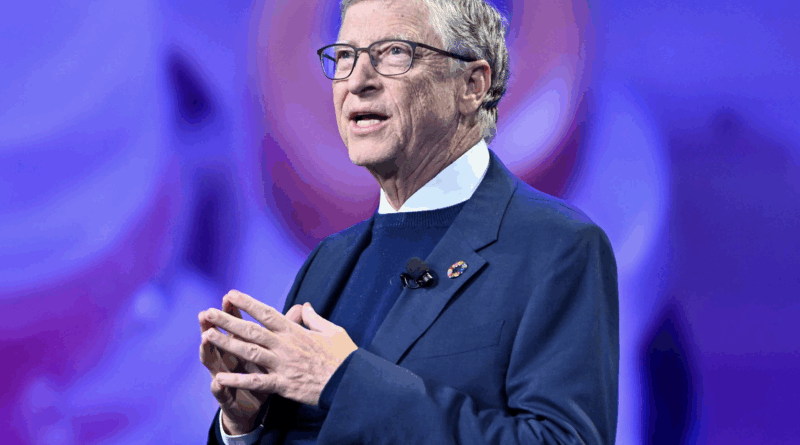
Bill Gates Says AI Will Replace Most Jobs and 2-Day Work Week is Coming
Microsoft founder Bill Gates made waves during a February appearance on The Tonight Show with Jimmy Fallon, sharing bold forecasts about artificial intelligence (AI) and its potential to reshape the future. Months later, his comments are resurfacing—and stirring both hope and concern.
Drawing from his decades-long career in computing, Gates likened AI’s current state to that of early computers: expensive and limited, but destined to become cheap and ubiquitous. He envisions a near future where AI delivers expert medical and educational support for free.
“The era that we’re just starting is that intelligence is rare… with AI over the next decade, that will become free. Commonplace… Great medical advice, great tutoring,” Gates said.
But not everyone shares his enthusiasm. Critics highlight two major concerns.
First, Gates’ assumption that the shortage of professionals like doctors and teachers can be solved by AI ignores deeper systemic issues—like underinvestment in public health and education.
Second, current AI tools are far from competent in these sensitive fields. Google’s Gemini chatbot, for example, has routinely shared misleading or false information. And medical AI tools have been shown to underperform for women and people of color, potentially widening health disparities.
Gates also touched on the transformative nature of AI, musing about a shorter workweek and a redefined labor market.
“What will jobs be like? Should we work like 2 or 3 days a week?… It’s a little bit unknown. Will we be able to shape it?” Gates said.
Fallon pressed him on the role of humans in the future. Gates replied, “Not for most things.”
While a shorter workweek is widely supported—UK pilot studies showed that productivity remained stable or improved—critics argue that AI isn’t being used to free humans from tedious labor. Instead, it’s encroaching on creative fields like art and writing, with many models trained on copyrighted or stolen content.
Gates also alluded to possible climate solutions powered by AI. Yet ironically, AI itself is under fire for its massive energy demands and water consumption, with even Microsoft admitting it’s falling short of its sustainability goals due to AI expansion.
Ultimately, Gates’ optimism reflects his own tech-centric worldview. Whether AI becomes a tool of liberation or disruption remains uncertain. As the machines evolve, so too will the debate surrounding their role in our lives.