


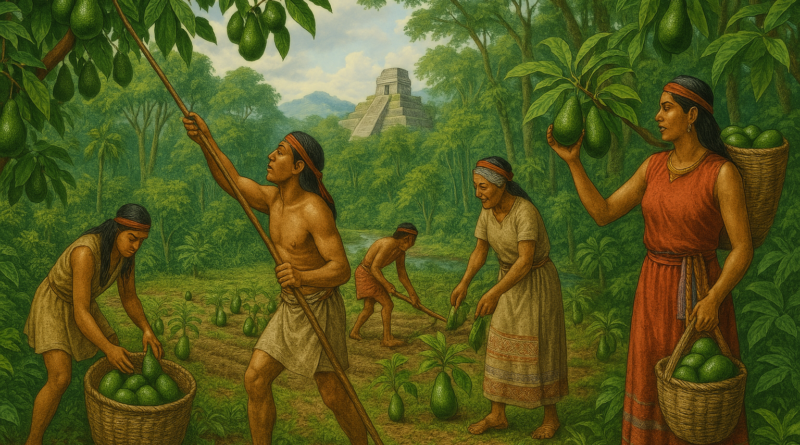
Ancient Farmers Domesticated Avocados Thousands of Years Before Maize, Study Reveals
Long before avocados became a global food trend or a brunch staple, they were once eaten whole by prehistoric megafauna such as ground sloths, gomphotheres, and toxodons, who roamed Central America during the late Pleistocene. These massive animals helped disperse avocado seeds—until their extinction around 12,000 years ago left the fruit’s future uncertain.
That’s when humans stepped in.
New Study Traces Avocado Domestication Back 11,000 Years
According to new research published in the Proceedings of the National Academy of Sciences, humans in Central America were consuming wild avocados as early as 11,000 years ago. The study highlights how Indigenous farmers gradually transformed the fruit into the nutritious, thick-skinned avocado we know today.
“Our work shows that Indigenous farmers selected bigger and thicker-skinned avocados over time,” said Doug Kennett, environmental archaeologist at the University of California, Santa Barbara.
“These selected traits made the fruit more productive and easier to transport, paving the way for its widespread global use today.”
El Gigante Rockshelter Offers Clues to Avocado’s Ancient Past
The study focused on El Gigante Rockshelter in western Honduras, a cave rich with well-preserved plant remains dating back thousands of years. By studying 700+ avocado pits and rinds, researchers used radiocarbon dating to track how the fruit’s size and structure evolved over time.
“At first, people were just picking wild fruits,” said co-author Amber VanDerwarker, an anthropologist at UCSB.
“But around 7,500 years ago, the avocado pits became larger, and rinds thicker—signs of intentional cultivation.”
By 4,500 years ago, the data suggests that early farmers were not only selecting but also planting avocado seeds, officially transitioning from foraging to full-scale avocado farming.
“These people literally domesticated their forests,” VanDerwarker told Forbes.
Avocados Were Domesticated Before Maize in the Region
This discovery challenges the traditional agricultural narrative in Mesoamerica, which often credits maize (corn) as the first domesticated crop. Evidence from El Gigante shows maize didn’t appear in the region until 4,300 years ago, while avocados were already under cultivation.
“This completely alters our understanding of early agriculture in Mesoamerica,” VanDerwarker said.
“By the time maize arrived, people were already skilled in planting and managing crops.”
Ancient Cultivation Methods May Hold Lessons for Modern Farming
Today, 90% of commercial avocados come from the Hass variety, which is propagated via cloning. While efficient, this method lacks genetic diversity, making it vulnerable to climate change and disease.
The ancient seed-based cultivation methods discovered at El Gigante preserved a wider gene pool, allowing avocados to adapt to shifting climates—a resilience modern agriculture may need to rediscover.
“If we want to keep eating guacamole for the next 10,000 years,” VanDerwarker said, “we might need to look to the past.”
Great Article!