


How a Snail’s Regenerating Eye Could One Day Help Restore Human Vision
In a groundbreaking discovery, researchers have found that a freshwater snail species from South America may hold critical insights into how to regrow human eye tissue — thanks to its extraordinary ability to fully regenerate an eye after amputation.
👁️ A Pet-Store Snail, A Scientific Breakthrough
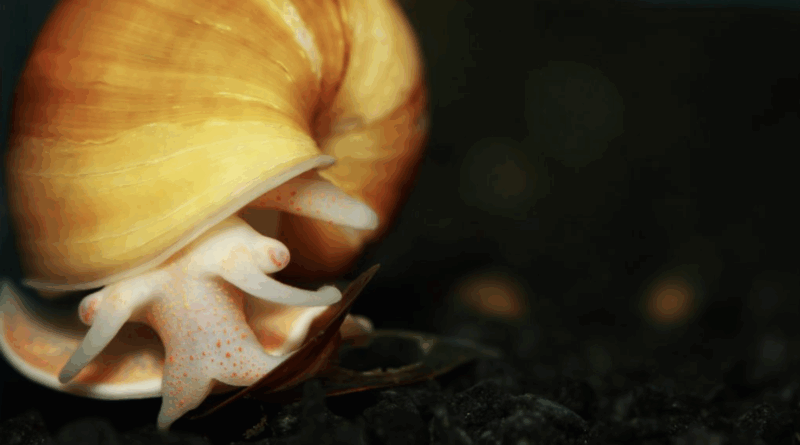
Known as the golden apple snail (Pomacea canaliculata), this aquarium staple is also one of the world’s most invasive species. That resilience caught the attention of Alice Accorsi, who first encountered the snail during her graduate studies in Italy.
“You could literally buy them in a pet store,” she recalls. “They clean the bottom of fish tanks.”
Now a developmental biologist at UC Davis, Accorsi has discovered that these snails can regrow a functional, brain-integrated eye within just a few months — a feat no human or mammal can naturally accomplish.
🧬 Genetic Engineering Fast-Tracked in Snails
Accorsi’s team used CRISPR/Cas9 gene editing to disable specific genes, including PAX6, which is essential for eye formation in both humans and snails. Mutant snails lacking the gene developed normally except for their eyes — and without vision, they couldn’t feed or move.
Still, they survived to adulthood with help from hand-feeding, offering rare insight into the genetic machinery behind vision and brain function.
“It’s not that Alice just discovered fire. It’s that she landed on the moon,” said Alejandro Sánchez Alvarado, who supervised Accorsi’s earlier work. “Now she needs to build the space station.”
🧠 Snail Eyes vs. Human Eyes: More Alike Than You’d Think
Unlike fruit flies, which are commonly used in eye research but have compound eyes, golden apple snails — like humans — have camera-type eyes, complete with cornea, lens, and retina. This anatomical similarity makes them valuable models for studying eye regeneration.
When Accorsi removed a snail’s eye, it regrew in under a month, and likely took another two to fully reconnect with the brain and restore vision, Sánchez Alvarado says. That’s a level of regenerative capability never observed in humans — even transplanted eyes have failed to rewire with the brain.
🔁 The Future of Vision Restoration?
Researchers believe the secret lies not in the genes themselves, but in molecular switches that control gene activation during regeneration. Snails may have unique regulatory pathways that humans lack — or we may have dormant ones that just need to be reactivated.
“You can at least start asking questions like, ‘Where’s the hang-up?’” says stem cell researcher Henry Klassen. “What genes fail to respond, or actively suppress regeneration?”
The research may not offer immediate cures for diseases like macular degeneration, but it offers a bold new path forward in regenerative medicine.