


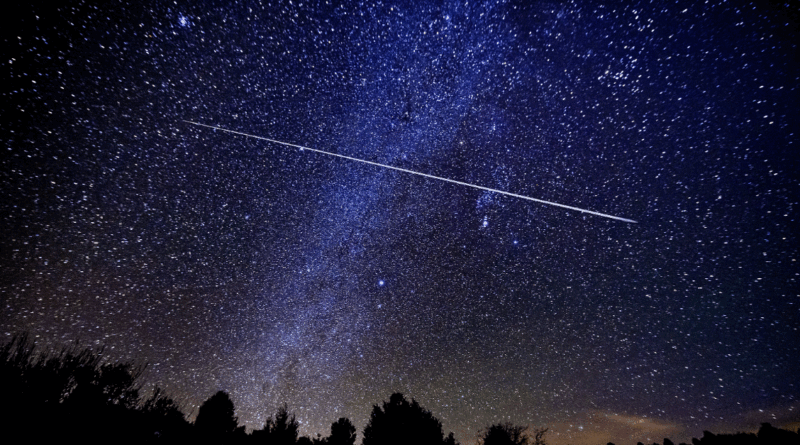
August Skywatch: Planet Parade, Perseids, and a Rare Black Moon
August 2025 is shaping up to be one of the most dazzling months in recent astronomy history. From a six-planet alignment to the Perseid meteor shower, and even a rare Black Moon, the night sky is offering a celestial show unlike any other — if you’re willing to be an early riser.
A Planetary Alignment You Don’t Want to Miss
Currently, six planets are visible in the pre-dawn sky — Saturn, Neptune, Uranus, Jupiter, Venus, and Mercury — with four clearly visible to the naked eye.
-
Saturn and Neptune rise late in the evening. Saturn is faint but visible without aid, while Neptune requires a telescope.
-
Uranus also needs magnification but appears in the early morning hours.
-
Jupiter and Venus, the two brightest objects after the Moon, rise during the night.
-
Mercury appears just before dawn — best viewed with an unobstructed, clear horizon.
If you’re planning to catch the alignment, next week is ideal, as Mercury will begin to drift closer to the Sun by mid-month, disappearing from view soon after.
Mark August 12 for Conjunction Magic
One of the most stunning events of the month is happening on August 12. That morning:
-
Venus and Jupiter will be in conjunction, appearing less than one degree apart — an event that will light up the sky with incredible brilliance.
-
Neptune and Saturn, already near each other, will also be in visual proximity.
-
To top it off, the Moon, Neptune, and Saturn will form a right-angle triangle — a rare and geometrically pleasing alignment.
How to Identify a Planet in the Sky
Here’s a quick tip: stars twinkle, planets don’t. Since planets are much closer to Earth, they appear as steady lights in the sky. So if something bright doesn’t twinkle — that’s probably a planet.
Between the Perseid meteor shower, the Black Moon, and this rare planetary parade, August 2025 is a feast for night sky enthusiasts. All you need is a clear sky, an early wake-up, and a sense of wonder.