


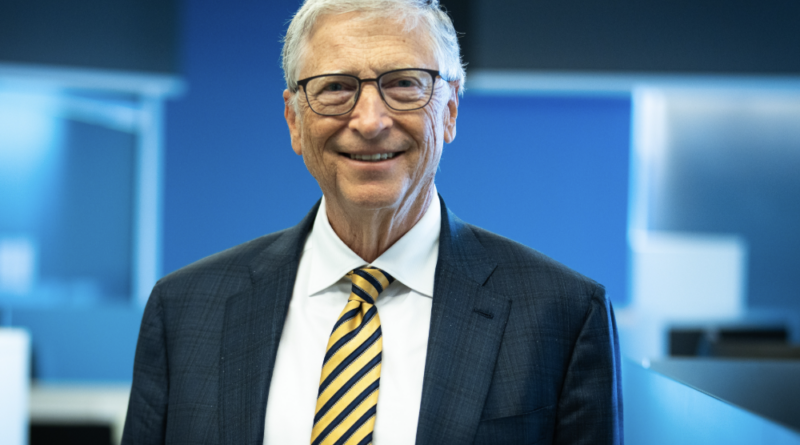
Bill Gates Predicts AI Will Redefine Work and Society
In a recent interview on The Tonight Show with Jimmy Fallon, Microsoft founder and tech magnate Bill Gates shared bold predictions about the future—particularly the transformative role of artificial intelligence (AI). While Gates expressed optimism about the impact of AI in solving societal challenges, his remarks have ignited controversy, with experts and the public debating both the ethics and practicality of AI’s current trajectory.
AI: The Next Great Equalizer—or a Misguided Hope?
Drawing from decades of experience in computing, Gates compared the early days of computers—when they were expensive and inaccessible—to the current evolution of AI technology. He suggested that just as computing power became widely available, AI will soon be cheap, ubiquitous, and revolutionary in fields where human intelligence is currently scarce.
“The era that we’re just starting is that intelligence is rare. You know, a great doctor, a great teacher… And with AI over the next decade, that will become free. Commonplace, you know? Great medical advice, great tutoring,” Gates told Fallon.
“It solves all these specific problems, like we don’t have enough doctors or, you know, mental health professionals.”
Gates argues that AI could democratize access to expertise—providing medical consultations and personalized education without human professionals. But this vision, though ambitious, has drawn sharp criticism.
Critics Call Out the Flaws in Gates’ Optimism
Two main criticisms have emerged. First, critics argue that the shortage of professionals in sectors like education and healthcare isn’t just a problem of efficiency or intelligence—it’s systemic. The root issue lies in underinvestment, poor working conditions, and lack of institutional support, not a lack of talent.
Second, many contend that AI is not ready to take over these critical roles. Systems like Google’s Gemini chatbot are already facing backlash for spreading misinformation at the top of search results. Similarly, medical AI models, while promising in diagnostics, have been shown to carry racial and gender biases, often missing conditions in women and people of color—exacerbating existing healthcare disparities.
Will AI Make Humans Obsolete?
In the interview, Gates also touched on how AI might reshape the future of work. He speculated about the possibility of shorter workweeks:
“Should we, you know, just work like 2 or 3 days a week?… It’s completely new territory.”
When asked by Fallon, “Will we still need humans?” Gates replied, “Not for most things.”
While the idea of a reduced workweek is appealing—and has shown positive results in pilot programs, like the UK’s 4-day workweek trial—the reality is more complicated. Many people argue that AI has yet to offer meaningful productivity gains in most industries. Instead of reducing tedious or dangerous labor, AI is disproportionately focused on creative tasks like writing and art—domains where human expression is most valuable.
Worse still, AI tools have come under fire for allegedly being trained on stolen or pirated creative content. Meta (Facebook’s parent company) and other tech giants have faced lawsuits and scrutiny for their data practices, calling into question whether these AI models respect copyright, privacy, or fairness.
AI’s Environmental Toll: The Cost of Progress?
Gates briefly alluded to climate innovation, but AI’s environmental footprint presents another ethical challenge. Training large-scale models consumes enormous amounts of water and energy, contributing significantly to carbon emissions. Ironically, companies like Microsoft, while promoting green initiatives, have reportedly missed climate targets due to the growing demand for AI infrastructure.
AI’s Uncertain Future: Hype or Hope?
While Gates’ predictions reflect a tech-optimist’s worldview, the broader public remains skeptical. The question isn’t just whether AI can replace jobs—but whether it should. What roles should AI play in our lives, and at what cost?
The future of AI remains unwritten, shaped not only by technological advancements but by public values, ethical debates, and global policy decisions. As AI becomes more integrated into society, its impact—positive or negative—will depend on how responsibly it is designed and deployed.