


Leonardo da Vinci: The Timeless Genius Who Bridged Art and Science
Leonardo da Vinci, the quintessential Renaissance man, remains one of the most influential figures in human history. Renowned as a master of both art and science, his profound curiosity, inventive mind, and keen observation of the natural world left an indelible mark on disciplines ranging from painting and anatomy to engineering and astronomy. This article delves into the life, masterpieces, character, and contributions of Leonardo da Vinci, illuminating why his legacy endures in modern society.
A Life Driven by Curiosity and Observation
Born on April 15, 1452, in Vinci, Italy, Leonardo da Vinci was the illegitimate son of a notary and a peasant woman. Despite the social stigma of his birth, Leonardo’s natural talents soon set him apart. He began his apprenticeship at the age of 14 in the studio of Andrea del Verrocchio, a prominent Florentine artist. Here, Leonardo honed his skills in painting, sculpture, and mechanical arts.
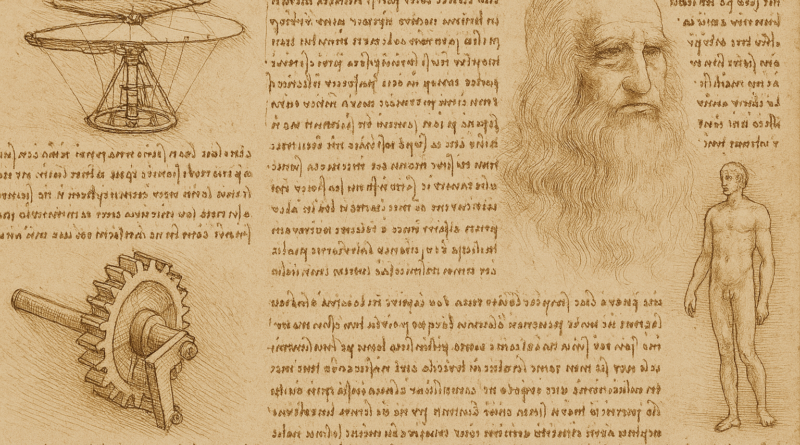
But it wasn’t just art that captivated him. From a young age, Leonardo displayed a relentless desire to understand how the world works. He kept detailed notebooks filled with observations, sketches, scientific diagrams, and philosophical musings—many of which remained unpublished during his lifetime but are now recognized as some of the most visionary scientific journals of the pre-modern era.
Artistic Masterworks That Redefined Visual Language
Leonardo’s artistic genius was evident in his revolutionary use of perspective, anatomy, light, and shadow. His most iconic paintings include:
-
Mona Lisa (La Gioconda): Housed in the Louvre Museum, this enigmatic portrait is celebrated for its subtle gradation of tone (sfumato) and the subject’s elusive expression. It has become the most recognized and studied painting in the world.
-
The Last Supper: Painted on the wall of the Convent of Santa Maria delle Grazie in Milan, this masterpiece captures the emotional reaction of each apostle as Jesus reveals his betrayal. Its composition, use of perspective, and psychological depth were groundbreaking.
-
Vitruvian Man: Though not a traditional painting, this famous sketch encapsulates Leonardo’s belief in the harmony between the human body and geometry, symbolizing the fusion of art, science, and philosophy.
His artworks are not just visually captivating but also embody a deep intellectual engagement with nature, human emotion, and physical laws—making them timeless studies in humanity and structure.
Personality: A Mind Ahead of Its Time
Leonardo was described by contemporaries as charismatic, generous, and deeply inquisitive. Giorgio Vasari, the famed art historian, wrote, “He possessed a beauty of person beyond expression… his genius was so rare and universal that it turned to every subject.”
Yet he was also famously unpredictable—often abandoning commissions mid-way to pursue other curiosities. He was left-handed, likely ambidextrous, and wrote in mirror script, which some believe was an intentional method to preserve the secrecy of his work.
His personality reflected a tension between his soaring intellect and the constraints of the era. In many ways, he was a man living centuries ahead of his time.
Scientific Exploration and Ingenious Inventions
Leonardo da Vinci’s scientific achievements were staggering, particularly considering he had no formal academic training. His notebooks cover a wide range of subjects, including:
-
Anatomy: Through meticulous dissection of human corpses, Leonardo produced some of the most accurate anatomical drawings ever seen before modern medical imaging. His sketches of the heart, brain, vascular system, and fetus in utero were centuries ahead of their time.
-
Engineering and Mechanics: He conceptualized machines that would only become feasible centuries later, such as helicopters, armored vehicles, automated machines, and water-lifting devices.
-
Botany and Hydraulics: He studied plant growth patterns, the flow of water, and erosion, using observational methods still relevant to environmental science today.
Though few of his inventions were built in his lifetime, his ideas contributed to the development of modern engineering and biomechanics.
Vision and Influence on Society
Leonardo da Vinci envisioned a world where science and art were not separate disciplines but two expressions of the same truth. His interdisciplinary approach became a model for later thinkers and is a foundational concept in modern STEM and STEAM education.
In the words of art critic Kenneth Clark: “Leonardo da Vinci was the most relentlessly curious man in history.” This curiosity drove him not only to create works of sublime beauty but also to seek answers to some of the most complex questions of his time.
His legacy influenced generations of scientists, artists, and inventors, from Galileo and Newton to contemporary figures in AI and design. The Renaissance spirit he embodied laid the groundwork for the scientific revolution and the Enlightenment.
Leonardo’s Enduring Legacy
Leonardo da Vinci died on May 2, 1519, in Amboise, France, leaving behind an unfinished corpus of work that continues to inspire wonder. Today, his notebooks are preserved in museums and libraries around the world, a testament to a life dedicated to the unrelenting pursuit of knowledge.
From the aesthetic perfection of the Mona Lisa to the anatomical accuracy of his sketches, and from his philosophical reflections to mechanical innovations, Leonardo da Vinci exemplified what it means to live without intellectual boundaries.
Leonardo da Vinci was not merely a painter or inventor—he was a bridge between eras, disciplines, and ways of seeing the world. His impact on science, art, and society remains unparalleled. In our age of specialization, Leonardo reminds us that true genius lies in connecting the dots between fields, in observing deeply, and in never ceasing to ask, “Why?”